
Uncategorized
Cannabis Laws in Belfast: Understanding Marijuana Legislation, Health Risks and Medical Use
Nov
Introduction
Cannabis remains a controlled drug in Belfast and throughout Northern Ireland. Although discussions about marijuana legalisation, medical cannabis and drug-policy reform continue across the UK, recreational cannabis possession, production and supply remain illegal.
For residents, students and visitors in Belfast, understanding the legal position is important. Cannabis-related offences can carry serious penalties, while certain cannabis-based medicines can be prescribed under specific medical arrangements.
Northern Ireland has its own justice, policing and healthcare institutions, but cannabis is controlled under UK drug legislation. This article explains the rules on possession and supply, medical cannabis prescribing, possible health risks and where people in Belfast can find reliable information and support.
1. Is Cannabis Legal in Belfast?
No. Recreational cannabis is illegal in Belfast. Cannabis is classified as a Class B controlled drug under the Misuse of Drugs Act 1971.
Unauthorised possession, production and supply are criminal offences. The law applies regardless of whether someone claims that cannabis is intended for personal use.
There are limited legal arrangements for authorised cannabis-based medicines. These arrangements do not make recreational cannabis lawful or create a general exemption for possession.
2. Cannabis Possession Laws in Northern Ireland
Possession means having a controlled drug under your control without lawful authority.
Under the Misuse of Drugs Act 1971, unauthorised possession of cannabis is an offence. The maximum penalties for possession of a Class B drug include:
- Up to five years’ imprisonment.
- An unlimited fine.
- Both imprisonment and a fine.
These are maximum penalties, not automatic sentences. The outcome of a case depends on the evidence, circumstances and relevant legal considerations.
Police Service of Northern Ireland (PSNI) officers can investigate suspected drug offences. Anyone facing an allegation should obtain advice from a qualified solicitor familiar with Northern Ireland’s criminal justice system.
3. Cannabis Supply and Production Offences
Supplying cannabis to another person without legal authority is a separate and more serious offence.
Under the Misuse of Drugs Act 1971, unauthorised supply and production of a Class B drug can carry a maximum penalty of 14 years’ imprisonment, an unlimited fine or both.
Supply does not necessarily involve selling cannabis for money. Giving a controlled drug to another person without payment can also constitute supply under the law.
Unauthorised production, including unlawful cultivation, can also result in criminal proceedings.
The seriousness of an alleged offence depends on the circumstances and evidence. Anyone facing a supply or production allegation should seek qualified legal advice.
4. Who Enforces Cannabis Laws in Belfast?
The PSNI is responsible for policing Belfast and the rest of Northern Ireland. It investigates suspected drug offences and works within the relevant legal framework.
Prosecutions are handled by the Public Prosecution Service for Northern Ireland (PPS). Cases may be dealt with through Northern Ireland’s courts, depending on the nature and seriousness of the alleged offence.
This means that although the main controlled-drug legislation is UK-wide, policing and prosecution in Northern Ireland operate through separate local institutions.
Residents should use official PSNI and PPS information when seeking details about investigations, criminal proceedings or legal procedures.
5. Is Medical Cannabis Legal in Belfast?
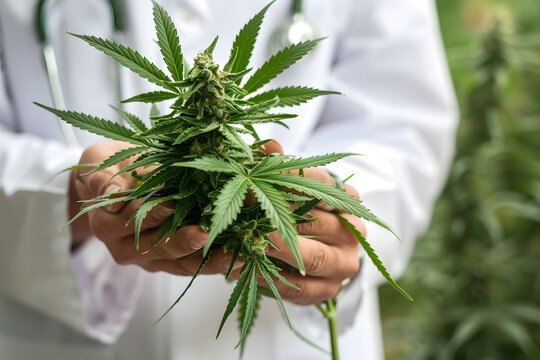
Yes. Certain cannabis-based medicinal products can legally be prescribed in Northern Ireland under the UK’s restricted medical framework introduced in November 2018.
In most circumstances, unlicensed cannabis-based medicinal products must be prescribed by a doctor on the General Medical Council’s Specialist Register.
The NHS identifies limited situations in which particular cannabis-based medicines may be considered, including:
- Certain severe forms of epilepsy: Specific cannabis-based medicines may be considered for particular rare epilepsy syndromes.
- Chemotherapy-related nausea and vomiting: Certain medicines may be considered when other treatments have not provided sufficient relief.
- Multiple sclerosis-related muscle stiffness: Nabiximols (Sativex) may be considered for some adults with moderate to severe spasticity when other treatments have not worked adequately.
These examples do not mean that everyone with these conditions qualifies. A specialist must assess the patient’s medical circumstances, previous treatments and available evidence.
NHS prescribing remains limited. Patients in Belfast should discuss treatment options with their GP or relevant hospital specialist rather than relying on online promises of guaranteed prescriptions.
6. Understanding THC and CBD
Cannabis contains several chemical compounds called cannabinoids. Two commonly discussed examples are THC and CBD.
THC (tetrahydrocannabinol) is the principal intoxicating cannabinoid in cannabis. It can affect perception, memory, concentration and coordination. THC-containing products are subject to relevant controlled-drug restrictions.
CBD (cannabidiol) does not produce the same intoxicating effects as THC. However, CBD products are not automatically authorised medicines or automatically exempt from all regulations.
The legal position depends on a product’s ingredients, cannabinoid content, intended use and applicable rules. Some products marketed as CBD may contain controlled cannabinoids.
Consumers should not assume that a product is legal or medically approved simply because it is labelled as CBD oil or hemp extract.
7. Cannabis and Public Health in Belfast
Cannabis is also a public-health issue. Its effects can vary between individuals and may depend on the product, frequency of exposure and personal health circumstances.
Potential health concerns include:
- Memory and concentration: Cannabis can affect attention, learning and short-term memory.
- Mental health: Some people experience anxiety, panic or paranoia. Frequent use, particularly of high-THC products, has been associated with an increased risk of psychosis in some individuals.
- Dependence: Some users develop cravings and difficulty controlling their use.
- Physical health: Smoking cannabis can expose the respiratory system to irritating substances.
- Road safety: Cannabis can impair coordination, judgement and reaction time.
Young people may face additional concerns because brain development continues into early adulthood.
Anyone experiencing persistent psychological or physical difficulties should seek advice from a qualified healthcare professional.
8. Cannabis and Drug-Driving Laws in Belfast
Drug-driving legislation applies in Northern Ireland. It is an offence to drive while impaired by drugs, and the law also establishes specified limits for certain controlled drugs, including THC.
The specified blood limit for THC is 2 micrograms per litre.
This is a legal threshold, not a recommended safe level. A driver may also commit an offence if their driving ability is impaired by drugs.
A statutory medical defence can apply in certain circumstances to people taking prescribed medicines in accordance with professional instructions. However, it does not permit someone to drive while impaired.
Patients prescribed cannabis-based medicines should discuss driving with their specialist or pharmacist and should never drive if they feel unfit to do so.
9. Where Can Belfast Residents Find Cannabis Support?
People experiencing difficulties related to cannabis use can seek confidential advice and treatment in Northern Ireland.
Possible starting points include:
- GP practices: A GP can discuss health concerns, assess possible dependence and advise on treatment or referrals.
- Northern Ireland Drug and Alcohol Services: Local health and social care services provide information and support for people affected by substance use.
- NHS and Health and Social Care services: These provide information about treatment, mental health and general health concerns.
- FRANK: A source of information about drugs, their risks and available support.
People concerned about a family member or friend can also seek advice. Support is not limited to people who are ready to stop using cannabis.
10. Cannabis Policy and Legalisation Discussions in Northern Ireland
Cannabis policy continues to generate debate across the UK, including Northern Ireland.
Discussions may focus on criminal penalties, public health, prevention, treatment, regulation and whether changes to drug legislation would improve public safety.
Northern Ireland has devolved responsibilities in areas including health and justice. However, the main legislation controlling cannabis remains part of the UK-wide controlled-drug framework.
It is important to distinguish between proposals for legal reform and changes that have actually become law. Recreational cannabis remains illegal in Belfast unless a specific legal exemption applies.
Frequently Asked Questions
Is marijuana legal in Belfast?
No. Recreational marijuana remains illegal in Belfast. Cannabis is a Class B controlled drug under the Misuse of Drugs Act 1971.
What is the maximum penalty for cannabis possession in Northern Ireland?
The maximum penalty for possession of a Class B drug is five years’ imprisonment, an unlimited fine or both. Actual outcomes depend on the circumstances of the case.
Can someone legally receive medical cannabis in Belfast?
Yes. Certain cannabis-based medicinal products can be prescribed under restricted medical arrangements. Prescribing generally requires assessment by a specialist doctor.
Is CBD legal in Northern Ireland?
CBD itself is not controlled under the Misuse of Drugs Act in the same way as cannabis and THC. However, CBD products must comply with applicable regulations, and some may contain controlled cannabinoids. Not every CBD product is an authorised medicine.
Can cannabis affect mental health?
Yes. Cannabis can be associated with anxiety, paranoia and other psychological effects. Frequent use, particularly of high-THC products, has been associated with an increased risk of psychosis in some people.
Where can people in Belfast get help with cannabis use?
Residents can start by contacting their GP or a local Health and Social Care service. FRANK also provides information about drugs and support options.
Conclusion
Cannabis remains illegal for recreational use in Belfast and throughout Northern Ireland. Unauthorised possession, production and supply can result in criminal penalties under the Misuse of Drugs Act 1971.
Certain cannabis-based medicines can be prescribed under a restricted medical framework, but access depends on specialist assessment and the available clinical evidence. These medicines should not be confused with recreational cannabis or unregulated CBD products.
Understanding the legal rules alongside the potential health risks is important for residents, families and visitors. Anyone seeking treatment or information should use official government, healthcare and support-service resources.
References and Further Reading
- UK Government – Misuse of Drugs Act 1971: https://www.legislation.gov.uk/ukpga/1971/38/contents
- Public Prosecution Service for Northern Ireland: https://www.ppsni.gov.uk/
- Police Service of Northern Ireland: https://www.psni.police.uk/
- Northern Ireland Department of Health – Drugs and Alcohol: https://www.health-ni.gov.uk/
- NHS – Medical Cannabis: https://www.nhs.uk/medicines/medical-cannabis/
- NICE – Cannabis-Based Medicinal Products: https://www.nice.org.uk/guidance/ng144
- General Medical Council – Cannabis-Based Products for Medicinal Use: https://www.gmc-uk.org/professional-standards/learning-materials/information-for-doctors-on-cannabis-based-products-for-medicinal-use
- GOV.UK – Cannabis, CBD and Other Cannabinoids: https://www.gov.uk/government/publications/cannabis-cbd-and-other-cannabinoids
- Food Standards Agency – Cannabidiol (CBD): https://www.food.gov.uk/safety-hygiene/cannabidiol-cbd
- GOV.UK – Drug Driving Law: https://www.gov.uk/drug-driving-law
- Talk to FRANK: https://www.talktofrank.com/
