
Uncategorized
UK Drum and Bass Festivals and Psychedelic Mushrooms: Music, Culture and Harm Reduction
Oct
Introduction
The United Kingdom has a vibrant electronic music scene, with drum and bass (DnB) festivals attracting music lovers who enjoy fast breakbeats, heavy basslines, underground sounds and immersive live performances. From outdoor summer festivals to underground club events, drum and bass has developed into a major part of British electronic music culture.
Alongside electronic music, psychedelic mushrooms have become a subject of growing public interest, particularly in discussions about consciousness, perception, psychology and the relationship between music and the human mind. These topics sometimes overlap in conversations about festival culture, although experiences vary considerably from person to person.
Understanding the cultural relationship between drum and bass and psychedelics requires more than exploring music and altered perception. It also means examining scientific research, mental health considerations, UK drug laws and practical harm-reduction principles.
This guide explores these subjects from an educational perspective, helping readers understand the culture without overlooking the potential risks.
Understanding the UK Drum and Bass Festival Scene
Drum and bass originated in the UK during the early 1990s, developing from jungle music and earlier rave culture. Its defining characteristics include rapid breakbeats, deep basslines, intricate rhythms and a wide range of styles, from atmospheric liquid DnB to darker neurofunk and high-energy jump-up.
Today, drum and bass events take place in nightclubs, warehouses, outdoor venues and large festival settings. Events such as Let It Roll, Hospitality on the Beach and various UK electronic music festivals demonstrate the international appeal of the genre, although event locations and programmes vary by year.
For many attendees, the attraction extends beyond the music itself. Festival culture can involve community, creative expression, visual art, dancing and the shared experience of listening to live DJs and producers.
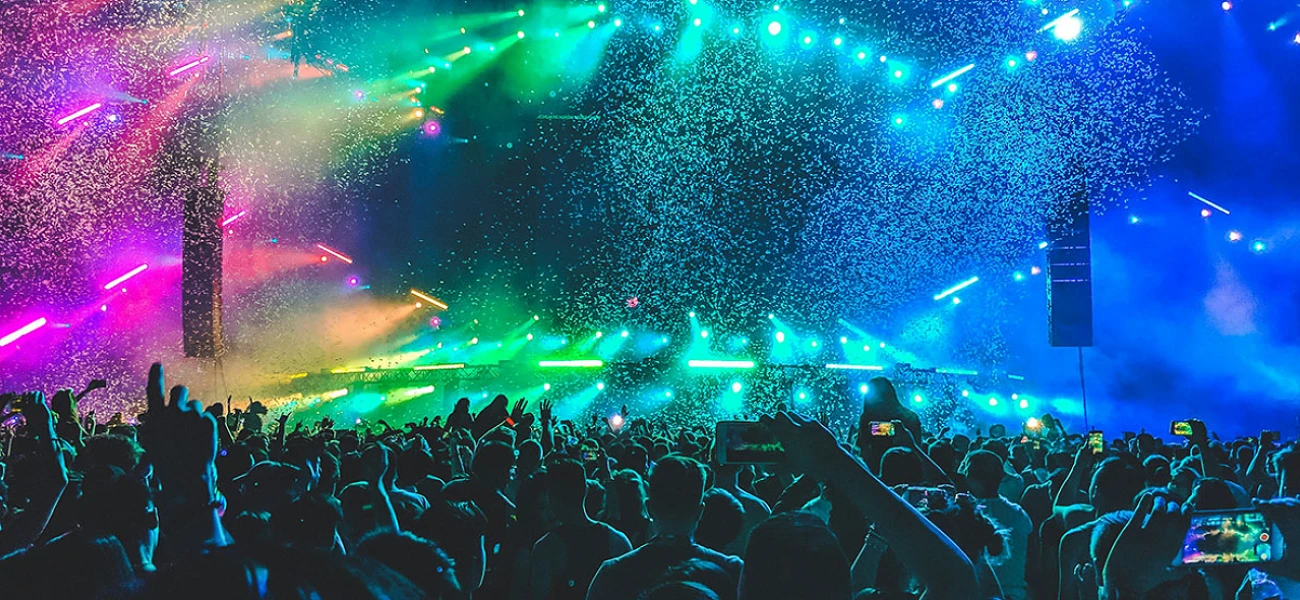
The intensity of the sound system, synchronized lighting and collective movement can also make electronic music events feel immersive. These experiences can be explained partly through ordinary psychological and physiological responses to rhythm, movement, expectation and social connection.
What Are Psychedelic Mushrooms?
Psychedelic mushrooms are fungi that contain psychoactive compounds, particularly psilocybin. After ingestion, the body converts psilocybin into psilocin, which interacts with serotonin receptors in the brain.
Research suggests that psilocybin can alter perception, mood, thought patterns and a person’s sense of time. Some people report changes in their emotional experiences or sensory awareness, while others experience anxiety, confusion or frightening psychological effects.
The intensity and character of these effects are unpredictable. They may depend on factors such as the individual, the substance’s potency, the surrounding environment and other substances taken at the same time.
Psychedelic mushrooms should not be confused with ordinary edible mushrooms. Wild mushroom identification can be difficult, and some poisonous species can cause severe illness or death.
The Connection Between Psychedelic Mushrooms and Electronic Music
Music has a powerful relationship with human emotion, memory and attention. A familiar bassline can create excitement, while atmospheric melodies and repetitive rhythms can encourage feelings of immersion or relaxation.
Psychedelic experiences have also been associated with changes in how people perceive music. Some research participants describe music as more emotionally intense or meaningful during supervised psychedelic research sessions.
However, these findings should not be interpreted as evidence that psychedelic mushrooms improve a festival experience. Clinical studies typically involve carefully screened participants, controlled doses, professional supervision and a structured environment. These conditions differ substantially from crowded music festivals.
Drum and bass, with its complex rhythms, powerful low frequencies and rapid changes in tempo, provides an interesting cultural context for discussions about auditory perception. Nevertheless, there is limited scientific evidence specifically examining psilocybin use at UK drum and bass festivals.
It is therefore important to distinguish personal anecdotes and cultural associations from conclusions supported by scientific research.
How Music Influences Mood and Perception
Music can influence emotions through rhythm, melody, expectation and memory. Fast tempos may encourage physical movement, while repetitive patterns can help listeners anticipate musical changes and become absorbed in a performance.
At festivals, other environmental factors contribute to the experience. Lighting, crowd movement, sound intensity, fatigue and social interactions can all influence how people feel.
Psychedelic substances may change the way some individuals interpret these sensations, but they can also amplify discomfort, sensory overload and emotional distress. A busy environment that feels exciting to one person may become overwhelming or frightening to another.
These differences highlight why psychedelic experiences cannot be predicted reliably and why claims about enhanced musical enjoyment should be treated cautiously.
Psychedelic Mushrooms and Mental Health
Psilocybin is being investigated for possible therapeutic applications in certain mental health conditions. However, clinical research does not establish that unsupervised use is safe or effective for everyone.
Potential acute effects include anxiety, panic, confusion, impaired judgment and distressing perceptual changes. Some individuals may experience persistent psychological difficulties after an adverse experience.
People with a personal or family history of psychotic disorders or certain other serious mental health conditions may face particular concerns. The risks of combining psychedelics with other psychoactive substances are also not fully predictable.
Festival environments can introduce additional challenges, including sleep deprivation, dehydration, overheating, crowd pressure and difficulty accessing a calm space. These conditions can make it harder to respond safely when someone becomes distressed.
Anyone experiencing serious or persistent psychological symptoms after taking a substance should seek appropriate medical assistance.
Harm Reduction at UK Music Festivals
Harm reduction focuses on reducing injury, illness and other negative outcomes. It does not mean that taking a substance is risk-free.
1. Understand the legal position
Psilocybin is a controlled substance under UK law. Psilocybin-containing mushrooms are generally controlled as Class A drugs under the Misuse of Drugs Act 1971. Possession, supply and production can carry serious legal consequences, subject to the circumstances and applicable law.
Festival policies may also prohibit illegal drugs, and event organisers can refuse entry or remove attendees under their published terms.
Readers should consult current official UK government guidance rather than relying on social media discussions or festival rumours.
2. Avoid mixing psychoactive substances
Combining psychedelic mushrooms with alcohol, stimulants or other psychoactive substances can increase unpredictability and make it more difficult to recognize or respond to medical problems.
A person who appears confused, agitated or physically unwell may require professional help rather than reassurance alone.
3. Recognize the effects of heat and exhaustion
Long periods of dancing, hot weather, crowded dance floors and inadequate rest can contribute to overheating and exhaustion.
Take breaks from dancing, rest in appropriate areas and drink fluids regularly according to thirst and conditions. Avoid excessive water consumption, which can also be dangerous.
4. Know when to seek emergency assistance
Severe confusion, loss of consciousness, seizures, breathing difficulties, chest pain or dangerous overheating require urgent medical attention.
Contact the event’s medical team or emergency services when necessary. Be honest with medical professionals about substances that may have been taken, as this information can help them provide appropriate care.
5. Look out for friends
Festival attendees can help each other by staying aware of changes in behaviour, checking on friends who appear unwell and contacting trained staff when someone needs assistance.
If a person becomes frightened or confused, reduce unnecessary stimulation where possible, speak calmly and avoid leaving them alone in an unsafe situation. Do not allow an impaired person to drive.
The UK Legal and Cultural Context
Psychedelic mushrooms remain subject to strict controls in the United Kingdom. Their cultural visibility in music, online communities or scientific discussions does not change their legal status.
The distinction between clinical research and recreational use is particularly important. Research involving psilocybin may take place under specific legal permissions, ethical review and medical supervision. Such studies do not make unsupervised use equivalent to clinical treatment.
For festivalgoers, understanding the law is part of responsible event preparation. Rules may also differ between the UK and other countries, so international visitors should not assume that regulations are the same everywhere.
The Future of Psychedelic Research and Electronic Music
Scientific interest in psychedelics has expanded in recent years, with researchers examining their effects on perception, emotional processing and selected mental health conditions.
Researchers have also investigated how music contributes to experiences during supervised psychedelic sessions. Music may influence emotional responses and the subjective character of an experience, although findings depend on the study design and individual differences.
These developments have encouraged wider conversations about music, consciousness and psychological wellbeing. However, more research is needed to understand how these findings relate to real-world environments such as dance festivals.
Future studies may help clarify the relationship between musical environments, altered perception and emotional responses. Until stronger evidence is available, it is important not to assume that observations from clinical settings apply directly to crowded festivals.
Frequently Asked Questions
Are psychedelic mushrooms legal at UK drum and bass festivals?
No. Psilocybin-containing mushrooms are generally controlled as Class A drugs in the UK. Festival attendance does not exempt a person from applicable drug laws.
Can psychedelic mushrooms change the way music sounds?
They can alter perception and emotional responses, and some people report that music feels different during psychedelic experiences. Responses vary, and the experience can also become distressing or overwhelming.
Are psychedelic mushrooms safe to take at music festivals?
There is no reliable way to guarantee safety. Crowds, heat, fatigue, unfamiliar surroundings and unpredictable psychological effects can introduce additional risks.
Is psilocybin being studied for mental health treatment?
Yes. Researchers are studying potential therapeutic applications in controlled clinical settings. This research does not establish that recreational use is safe or suitable for everyone.
What should someone do if a friend becomes unwell at a festival?
Contact festival medical staff or emergency services if the person has severe symptoms or appears to be in danger. Stay calm, provide accurate information and follow professional instructions.
Conclusion
UK drum and bass festivals represent a vibrant part of electronic music culture, bringing people together through rhythm, performance and shared experiences. Psychedelic mushrooms are also a subject of cultural discussion and scientific investigation because of their effects on perception and consciousness.
Although music and psychedelics are sometimes discussed together, cultural interest should not be confused with proof of safety or therapeutic benefit. The psychological effects of psilocybin can be unpredictable, and the legal consequences in the UK can be serious.
A balanced understanding of these subjects involves appreciating electronic music culture, examining scientific evidence critically, understanding current legislation and recognizing the importance of harm reduction. By approaching the topic with accurate information and an awareness of mental and physical health risks, readers can engage more thoughtfully with discussions about music, psychedelics and festival wellbeing.
Further Reading and Sources
For reliable information and additional research, consult:
- UK Government — Drug penalties: https://www.gov.uk/penalties-drug-possession-dealing
- UK legislation — Misuse of Drugs Act 1971: https://www.legislation.gov.uk/ukpga/1971/38/contents
- NHS — Magic mushrooms: https://www.nhs.uk/
- National Institute on Drug Abuse (NIDA) — Psilocybin and psychedelic research: https://nida.nih.gov/
- PubMed — Scientific research on psilocybin, music and perception: https://pubmed.ncbi.nlm.nih.gov/ The Ultimate Guide to Raving in 2025: Best Drum & Bass Festivals & Events | Drum and Bass UK
